Address:
Plot No. B-6/5, Site 5 Surajpur Industrial Area, Block F, Surajpur Site V, Greater Noida, Uttar Pradesh 201306
For Business: +91 9212314779
For Careers: +91 84483 40400
Landline: 0120-4298000
Address:
Plot No. B-6/5, Site 5 Surajpur Industrial Area, Block F, Surajpur Site V, Greater Noida, Uttar Pradesh 201306
For Business: +91 9212314779
For Careers: +91 84483 40400
Landline: 0120-4298000


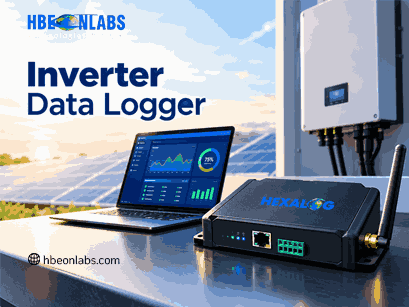
Solar EPC projects increasingly involve inverter fleets from different manufacturers, particularly across large rooftop portfolios, distributed installations and projects executed in phases. Integrating these inverters into one monitoring architecture is not simply a matter of connecting a communication device and collecting readings. The inverter data logger has to communicate reliably with different inverter interfaces, interpret the available parameters correctly, transmit the information to the monitoring platform and retain data when communication is interrupted.
Hardware compatibility, communication protocols, network connectivity and software configuration all need to be evaluated before deployment.
For EPCs, selecting a suitable data logger for solar inverter applications therefore requires looking beyond connectivity specifications. The device must fit the inverter architecture, project scale, monitoring requirements and long-term maintenance model.
The first technical checkpoint is the physical communication interface available on each inverter.
Different inverter manufacturers may provide RS485, RS232, Ethernet, USB, TTL or proprietary communication interfaces. Even when two inverters use RS485, their communication parameters and register structures may be different.
An EPC should document the following for every inverter model:
A solar project with five inverter models can therefore require several different integration configurations even when the same data logger hardware is used across the site.
A logger supporting multiple interfaces, such as RS485, RS232, TTL and USB, can simplify hardware integration, but the interface alone does not establish protocol compatibility. The inverter communication documentation still needs to be reviewed.
Physical connectivity is only the first layer of integration. The data logger must understand how information is structured and transmitted by each inverter.
Two manufacturers may expose similar information, such as voltage, current, power, energy generation and fault status, through different registers or data structures. Parameter addresses can also vary between inverter models from the same manufacturer.
Before selecting a solar inverter data logger, EPC teams should obtain the communication protocol documentation from each inverter manufacturer.
Particular attention should be given to:
The integration team should also determine whether the logger can be configured for different register maps rather than assuming one configuration will work across the entire inverter fleet.
Multi-brand integration becomes more complex when different inverter models are installed at the same site.
The logger architecture should allow individual devices to be identified and configured separately. This includes device addresses, communication parameters, inverter models and data mappings.
A practical deployment should maintain a clear device-level configuration structure. For example, an EPC may have:
| Inverter group | Interface | Configuration requirement |
| Brand A | RS485 | Register map A |
| Brand B | RS485 | Register map B |
| Brand C | RS232 | Serial configuration C |
| Brand D | Wi-Fi | Wireless configuration |
This type of architecture makes commissioning and troubleshooting easier because engineers can isolate an issue to a specific inverter group instead of treating the entire site as one communication network.
The amount and frequency of data collected should match the project’s monitoring requirements.
A data logger inverter setup may collect information at fixed intervals or use a configurable transmission schedule. HBeonLabs’ data logger specifications, for example, support a default five-minute data transmission interval with configuration options.
The appropriate interval depends on the application. A site requiring detailed operational analysis may need more frequent data collection than a basic performance reporting system.
However, shorter transmission intervals can increase communication traffic, cloud requests and data storage requirements. EPC teams should therefore evaluate the complete data pipeline rather than selecting the shortest possible interval.
Solar installations are often located across geographically distributed or remotely managed sites. Cellular or Wi-Fi connectivity can therefore become temporarily unavailable.
A reliable logger should have a defined approach to data interruption. The important question is not only whether the device can transmit data, but whether measurements collected during a communication outage can be recovered.
Breakpoint resuming is particularly relevant here. When connectivity is restored, the device can resume transmission of pending information instead of treating the outage as permanent data loss.
For EPCs managing multiple sites, this capability can reduce gaps in historical monitoring data and make remote diagnostics more dependable.
The choice between a wifi data logger for solar inverter applications and a 4G-based device should be based on site infrastructure rather than preference.
Wi-Fi can be appropriate where reliable local wireless infrastructure already exists and the inverter installation is within suitable network coverage. It can also simplify connectivity in locations where an established network is available.
4G connectivity can be more suitable for distributed installations where dedicated cellular communication is preferred. A 4G data logger can provide an independent communication route without relying on the site’s existing Wi-Fi network.
EPCs should evaluate:
The connectivity decision should be made during system design rather than after the logger has already been installed.
For projects subject to specific solar monitoring and communication requirements, M2M connectivity can become an important part of the data logger architecture.
EPCs should establish how the communication device handles the SIM, network connection, data transmission and communication with the intended server environment.
The logger should also be evaluated for secure transmission and device management. Where large numbers of field devices are deployed, manually configuring every device can create a significant operational burden.
The communication architecture should therefore support consistent deployment, device identification and remote management wherever the project requires it.
An inverter logger should not be evaluated only on its ability to send live information to the cloud.
Local memory becomes important when communication is temporarily unavailable. The logger should have sufficient storage for the expected data volume and outage conditions.
EPC teams should determine:
These factors become increasingly important when hundreds or thousands of devices are deployed across multiple locations.
The field device is only one part of the monitoring system. The data must eventually reach the required cloud or centralised monitoring environment.
Before procurement, EPC teams should understand how the logger communicates with the server and how data is identified once it reaches the platform.
Important questions include:
A well-planned architecture creates a continuous data path from the inverter to the logger and then from the logger to the monitoring platform.
Firmware maintenance is an important consideration in long-term solar deployments.
An EPC may initially install a logger with a particular firmware version, but future inverter changes, communication improvements or system requirements may require software updates.
Over-the-air firmware upgrades can reduce the need for physical access to every device. This is especially useful when data loggers are installed across geographically distributed solar assets.
However, EPC teams should also understand how an OTA update is authenticated, delivered, verified and recovered if an update is interrupted.
Field visits are expensive when a project contains numerous remote solar installations. A suitable logger should therefore support effective troubleshooting wherever the architecture permits it.
Remote diagnostics can help engineering teams identify whether an issue originates from:
This separation is important. For example, if an inverter is operating normally but its readings are not reaching the monitoring platform, replacing the inverter would not solve the actual problem.
A logger supporting local and remote debugging can help narrow down the fault before engineers are sent to the site.
Solar installations expose electronic equipment to temperature variation, dust, humidity and other environmental conditions.
The data logger’s operating temperature, humidity rating, enclosure protection and power requirements should therefore be checked against the actual installation environment.
For example, HBeonLabs’ Hbeon-DLWU Wi-Fi logger specifies an operating temperature range of -30°C to +70°C, IP64 protection and a DC 5 to 12V supply. The Hbeon-DL4GU 4G model specifies an operating temperature range of -30°C to +70°C and a 3.4V to 4.3V supply range.
These specifications should always be compared with the project’s installation conditions rather than considered in isolation.
Multi-brand integration should be tested before full-scale deployment.
An EPC should ideally validate one representative unit from every inverter model before ordering and installing the complete logger population. This allows the engineering team to identify communication or mapping issues at an early stage.
The commissioning process should verify:
This approach reduces the risk of discovering compatibility problems after installation across an entire project.
The data logger selected for a small installation may not necessarily be appropriate for a large portfolio.
EPCs should consider the number of inverters per logger, number of logger installations, data frequency, cloud traffic and future expansion.
A scalable architecture should make it possible to add new inverter models without redesigning the complete monitoring system.
This is particularly important for EPC companies working with different inverter manufacturers across multiple projects. A flexible inverter data logger platform can reduce the need to maintain separate hardware and integration processes for every inverter ecosystem.
Technical documentation can significantly affect deployment time.
Before selecting a data logger for solar inverter applications, EPCs should ask for:
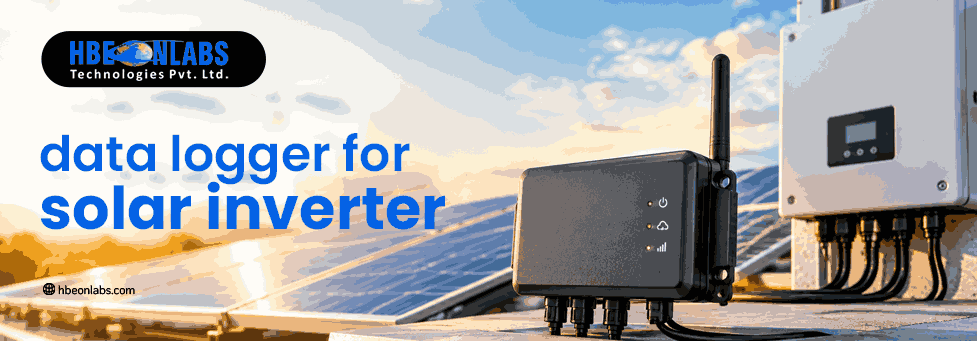
Supplier support is particularly important when integrating multiple inverter brands because problems may involve both the inverter communication layer and the logger configuration.
At HBeonLabs Technologies Pvt. Ltd., we develop electronics, embedded systems and IoT solutions with the integration requirements of industrial applications in mind. Our solar monitoring portfolio includes Wi-Fi and 4G data logger options with interfaces such as RS485, RS232, TTL and USB. Our Hbeon-DLWU and Hbeon-DL4GU platforms support configurable data transmission, breakpoint resuming and cloud connectivity, while the 4G model also supports encrypted two-way communication and OTA firmware upgrades. We also provide the embedded and IoT engineering capabilities needed to address communication, monitoring and remote diagnostic requirements across solar applications. Our approach is to evaluate the inverter communication environment, hardware interfaces and monitoring architecture before defining the appropriate integration approach.
Integrating a data logger with multiple inverter brands requires more than matching communication ports. Solar EPCs need to examine protocol compatibility, register mapping, connectivity, data recovery, memory, cloud architecture, security, environmental specifications and remote maintenance capabilities.
A suitable solar inverter data logger should fit the complete monitoring architecture, from the inverter communication interface to centralised data management. Testing each inverter model before large-scale deployment can also identify compatibility issues early and simplify commissioning.
For EPCs managing diverse inverter fleets, the right approach is to treat the logger as part of the overall solar monitoring system rather than as an isolated hardware component. This makes the selection process more technical, more predictable and easier to scale across future projects.
Yes, provided the logger supports the required communication interfaces and can be configured for the protocols, register maps and communication parameters used by each inverter model.
They should verify the communication interface, protocol, register mapping, baud rate, device addressing, supported parameters and power requirements before installation.
Neither is universally better. Wi-Fi can suit sites with reliable existing network infrastructure, while 4G can be useful for distributed installations requiring independent cellular connectivity.
It allows stored data to be transmitted after a temporary network interruption, helping reduce gaps in historical inverter and generation data.
Different inverter brands can use different register addresses, data structures and communication settings. Protocol compatibility ensures that the logger can correctly collect and interpret the required inverter parameters.