Address:
Plot No. B-6/5, Site 5 Surajpur Industrial Area, Block F, Surajpur Site V, Greater Noida, Uttar Pradesh 201306
For Business: +91 9212314779
For Careers: +91 84483 40400
Landline: 0120-4298000
Address:
Plot No. B-6/5, Site 5 Surajpur Industrial Area, Block F, Surajpur Site V, Greater Noida, Uttar Pradesh 201306
For Business: +91 9212314779
For Careers: +91 84483 40400
Landline: 0120-4298000


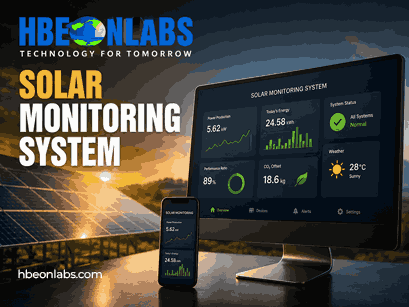
Operation and maintenance (O&M) is one of the most significant long-term expenses for solar EPC companies. While the initial installation generates revenue, maintaining system performance throughout the project lifecycle determines profitability, customer satisfaction, and business reputation. As Solar Monitoring System portfolios continue to grow across residential, commercial, industrial, and utility-scale projects, traditional maintenance practices involving frequent site visits and manual inspections are becoming increasingly inefficient.
A modern Solar Monitoring System enables EPC companies to monitor plant performance remotely, identify faults early, reduce unnecessary maintenance visits, and improve operational efficiency. Combined with a reliable Solar Data Logger, remote monitoring provides continuous visibility into every connected solar installation, helping businesses make informed maintenance decisions based on real-time operational data rather than assumptions.
This article explains how remote solar monitoring helps solar EPC companies lower O&M costs while improving service quality and long-term asset performance.
Solar installations are often considered low-maintenance assets, but every project requires regular monitoring and servicing to maintain optimal performance. O&M activities typically include:
For EPC companies managing hundreds or thousands of installations, these activities can quickly become resource intensive. Every unnecessary technician visit, delayed fault response, or undetected equipment issue adds to operational costs.
Remote monitoring changes this approach by allowing service teams to assess plant health before dispatching field engineers.
Many EPC companies still rely on periodic manual inspections or customer complaints to identify system issues. This reactive approach creates several challenges.
Routine inspections often require engineers to travel even when systems are functioning normally. Travel expenses, manpower, fuel costs, and time spent commuting all contribute to higher operating costs.
Minor issues such as communication failures, inverter alarms, or gradual performance degradation may remain unnoticed for days or weeks. During this period, energy generation losses continue to accumulate.
As the number of installations grows, more field personnel are required to maintain service levels. Without automation, labour costs increase in proportion to project size.
Manual maintenance provides only periodic snapshots of system performance. Operators cannot easily identify intermittent faults or performance fluctuations occurring between inspections.
These limitations make traditional maintenance difficult to scale.
A Solar Monitoring System provides continuous visibility into connected solar assets through cloud-based dashboards, communication devices, and intelligent reporting.
Instead of waiting for scheduled inspections, service teams receive operational data in real time, allowing them to respond only when maintenance is actually required.
Key parameters commonly monitored include:
This enables maintenance teams to prioritise work based on actual plant conditions.
A Solar Data Logger serves as the communication bridge between field equipment and the monitoring platform.
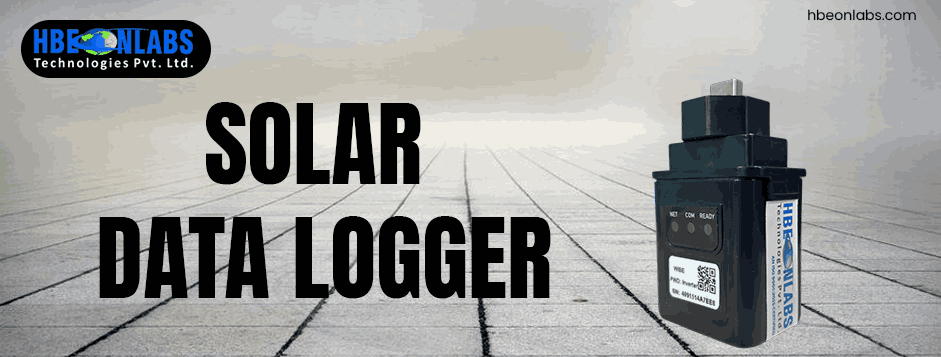
Installed alongside solar inverters, the logger collects operational data from connected devices and securely transmits it to cloud servers through communication technologies such as GSM, 4G LTE, Wi-Fi, Ethernet, or RS485.
Depending on project requirements, a solar power data logger may support:
Without a dependable Solar Data Logger, real-time monitoring cannot deliver accurate or consistent operational insights.
One of the biggest operational advantages of remote monitoring is reducing avoidable field visits.
Instead of visiting every project according to a fixed schedule, EPC companies can remotely verify:
If all parameters remain within acceptable limits, no physical inspection is required.
Technicians are dispatched only when the monitoring platform identifies genuine issues requiring on-site intervention.
This significantly reduces:
For companies managing geographically distributed projects, the savings can be substantial.
Every hour of inverter downtime reduces energy production.
Remote monitoring continuously evaluates system performance and immediately notifies operators when abnormalities occur.
Common faults include:
Early detection enables service teams to resolve issues before they develop into expensive failures or prolonged downtime.
This improves both plant availability and customer satisfaction.
Preventive maintenance is more effective when based on actual equipment behaviour rather than fixed maintenance schedules.
Historical operational data allows EPC companies to identify:
Maintenance activities can then be planned proactively before failures occur.
This reduces emergency repair costs while extending equipment life.
Before visiting a project site, engineers can review monitoring data to understand the likely cause of the issue.
Instead of arriving with limited information, technicians know:
This improves first-time resolution rates while reducing repeat visits.
Better preparation translates directly into lower operational expenses.
Modern EPC companies often manage installations across several cities or states.
A centralised Solar Monitoring System allows operations teams to supervise all projects through a single dashboard.
Users can:
Centralised visibility simplifies large-scale operations without increasing administrative overhead.
Commercial and industrial customers increasingly expect transparency regarding system performance.
Remote monitoring enables EPC companies to provide:
Access to accurate operational information strengthens customer confidence while reducing support requests.
Instead of responding to customer concerns reactively, EPC companies can provide proactive updates based on real-time data.
Warranty claims often require historical operational records.
A Solar Data Logger automatically stores valuable information including:
This documentation simplifies warranty verification and helps identify whether failures result from manufacturing defects, installation issues, or external factors.
Accurate data reduces unnecessary warranty disputes and speeds up resolution.
Historical performance trends reveal patterns that are difficult to identify during manual inspections.
For example:
These indicators allow maintenance teams to schedule servicing before failures occur.
Predictive maintenance reduces unexpected breakdowns while improving equipment reliability.
As solar portfolios expand, workforce optimization becomes increasingly important.
Remote monitoring allows fewer engineers to supervise more installations without compromising service quality.
Field engineers focus on technical tasks rather than routine inspections.
Operations teams concentrate on:
This improves resource utilisation while controlling operational costs.
Government projects and commercial clients often require detailed operational reports.
A Solar Monitoring System simplifies reporting by automatically generating:
Automated reporting reduces manual data collection while improving reporting accuracy.
Not every monitoring solution delivers the same operational value.
Solar EPC companies should evaluate several technical factors before deployment.
Choose solutions supporting GSM, 4G LTE, Wi-Fi, or Ethernet depending on project requirements.
Secure communication protects operational information and improves system reliability.
The platform should support multiple inverter manufacturers and communication protocols.
The monitoring platform should accommodate future project expansion without requiring major infrastructure changes.
Features such as remote configuration and firmware updates reduce maintenance effort.
A dependable solar power data logger should provide accurate data collection, stable communication, and long-term operational reliability across different installation environments.
Reducing O&M costs is not simply about lowering maintenance expenses.
Remote monitoring creates long-term business value through:
Collectively, these improvements increase project profitability while strengthening service capabilities.
At HBeonLabs Technologies Pvt. Ltd, we develop reliable remote monitoring solutions that help solar EPC companies manage projects more efficiently. Our Solar Monitoring System combines advanced communication technologies with robust Solar Data Logger solutions to provide real-time visibility into solar installations. We design our products to support secure data transmission, remote diagnostics, cloud-based monitoring, and scalable deployment across residential, commercial, and industrial solar projects. With our expertise in embedded systems, IoT technologies, and solar monitoring infrastructure, we help our customers simplify operations, improve maintenance planning, and build dependable monitoring ecosystems that support long-term business growth.
As India’s solar sector continues to expand, EPC companies must find practical ways to control operating costs while maintaining high service standards. Traditional maintenance models based on routine inspections are becoming increasingly expensive and difficult to scale.
A modern Solar Monitoring System, supported by a dependable Solar Data Logger and an efficient solar power data logger, enables remote visibility into plant performance, allowing maintenance teams to identify issues early, reduce unnecessary site visits, improve technician productivity, and maximise system uptime. By adopting remote monitoring as a core component of their O&M strategy, solar EPC companies can deliver better service, improve operational efficiency, and achieve stronger long-term profitability across their solar project portfolios.
A Solar Monitoring System enables solar EPC companies to remotely track the performance of solar installations in real time. It provides insights into energy generation, inverter status, system health, and fault conditions, helping reduce operational costs, improve maintenance efficiency, and ensure maximum plant uptime.
A Solar Data Logger collects operational data from solar inverters and other connected devices, then securely transmits it to a cloud-based monitoring platform using communication technologies such as GSM, 4G LTE, Wi-Fi, or Ethernet. This allows operators to monitor system performance remotely and respond quickly to any issues.
Remote monitoring reduces the need for routine site visits by providing continuous visibility into system performance. It enables early fault detection, supports preventive maintenance, improves technician productivity, minimises downtime, and helps optimise maintenance schedules, resulting in lower operation and maintenance costs.
When selecting a solar power data logger, businesses should consider compatibility with multiple inverter brands, secure data transmission, real-time monitoring capabilities, remote firmware updates, cloud integration, support for communication protocols such as RS485 and Modbus, and reliable performance in varying environmental conditions.
Yes. Most modern Solar Monitoring Systems are designed to support multiple sites through a centralised dashboard. This enables EPC companies, asset owners, and O&M teams to monitor plant performance, analyse historical data, receive fault alerts, and generate reports for all connected installations from a single platform.