Address:
Plot No. B-6/5, Site 5 Surajpur Industrial Area, Block F, Surajpur Site V, Greater Noida, Uttar Pradesh 201306
For Business: +91 9212314779
For Careers: +91 84483 40400
Landline: 0120-4298000
Address:
Plot No. B-6/5, Site 5 Surajpur Industrial Area, Block F, Surajpur Site V, Greater Noida, Uttar Pradesh 201306
For Business: +91 9212314779
For Careers: +91 84483 40400
Landline: 0120-4298000



India’s rooftop solar sector is expanding rapidly, driven by government initiatives aimed at increasing clean energy adoption across residential, commercial, and industrial segments. As installations continue to grow, ensuring reliable monitoring and secure communication between solar assets and central monitoring platforms has become a national priority. A data logger for solar inverter acts as the communication bridge between the inverter and the monitoring platform. It continuously collects operational data from the inverter and transmits it to cloud servers or authorised monitoring systems.
This has led the Ministry of New and Renewable Energy (MNRE) to introduce updated communication requirements for solar inverter monitoring devices.
One of the most significant changes is the requirement for Machine-to-Machine (M2M) SIM communication in solar inverter data loggers. This requirement is designed to improve the security, reliability, and standardisation of data transmitted from distributed solar installations to authorised monitoring systems.
For inverter manufacturers, EPC companies, solar developers, and system integrators, understanding these requirements is essential for achieving compliance and ensuring uninterrupted participation in government-supported solar programmes.
A modern solar data logger typically captures:
This information enables plant owners and service providers to monitor system performance, identify operational issues, and perform preventive maintenance.
With the latest MNRE guidelines, the role of the data logger has expanded beyond monitoring. It has become a critical compliance component within India’s rooftop solar ecosystem.
An M2M SIM, or Machine-to-Machine SIM, is a specialised SIM card designed for communication between electronic devices without human intervention.
Unlike consumer mobile SIM cards, M2M SIMs are built for industrial applications that require:
In solar installations, the M2M SIM enables the data logger to securely transmit operational data from the inverter to authorised cloud platforms and government monitoring infrastructure.
The rapid growth of distributed solar installations has increased the need for consistent and secure communication across thousands of geographically dispersed systems.
Traditional communication methods often create challenges such as:
The updated MNRE requirements aim to establish a standard communication framework that improves visibility across the national rooftop solar programme.
The objectives include:
Many earlier installations relied on standard consumer SIM cards. While suitable for basic communication, they are not designed for long-term industrial deployment.
Consumer SIMs may experience:
Industrial M2M SIMs address these limitations through purpose-built connectivity designed for continuously operating devices.
Although manufacturers should always refer to the latest official notifications for detailed technical specifications, the current framework focuses on several critical communication requirements.
The communication channel between the data logger for solar inverter and monitoring servers must support secure, uninterrupted machine communication without depending on manual intervention.
This reduces operational risks while improving long-term system reliability.
One of the major requirements is the ability of compliant communication devices to connect with designated national monitoring infrastructure.
The data logger should support reliable data transmission to authorised platforms using approved communication methods.
This enables centralised monitoring while maintaining consistency across different inverter manufacturers.
Solar installations are frequently located in rural and semi-urban regions where network quality can vary significantly.
The communication module should therefore provide dependable connectivity capable of operating under varying signal conditions.
Industrial-grade M2M SIMs are specifically designed for these deployment environments.
Field visits significantly increase operational costs.
Modern communication devices should support remote configuration, firmware updates, diagnostics, and communication management wherever applicable.
Remote management improves maintenance efficiency while reducing downtime.
Monitoring data is valuable only when transmitted consistently.
The communication infrastructure should support scheduled data uploads at configurable intervals while maintaining transmission reliability.
Consistent reporting allows operators to detect faults before they result in major energy losses.
The introduction of industrial communication standards provides several operational benefits.
Continuous communication ensures that performance information reaches monitoring platforms without unnecessary interruptions.
Reliable data enables faster issue detection and more accurate performance reporting.
When communication remains stable, faults such as inverter shutdowns, grid abnormalities, or communication failures can be detected much earlier.
This reduces maintenance response times.
Companies managing hundreds or thousands of installations can monitor all connected systems from a unified platform.
Centralised monitoring simplifies operations while improving service efficiency.
Industrial communication solutions generally include stronger authentication and security mechanisms than consumer-grade alternatives.
This helps protect operational data and connected infrastructure.
Communication reliability depends not only on the SIM but also on the overall hardware architecture.
Many businesses evaluate both GSM and wifi data logger for solar inverter solutions depending on the installation environment.
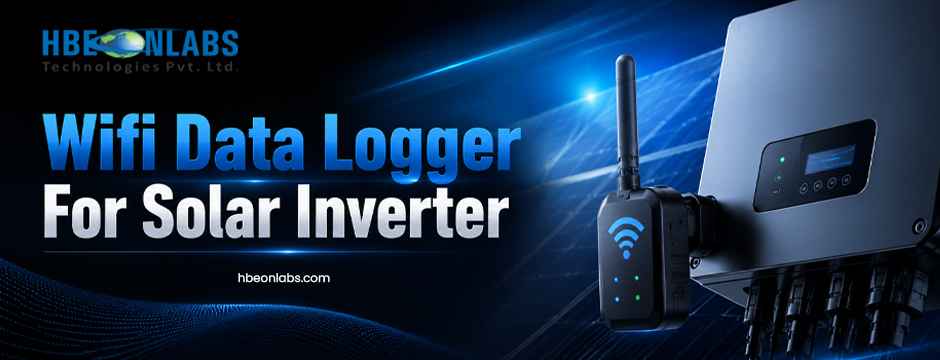
A Wi-Fi based device may be suitable where stable internet infrastructure already exists, such as commercial buildings or industrial facilities.
However, many rooftop solar projects are deployed in locations where dedicated broadband connectivity is unavailable. In such cases, GSM-based communication supported by industrial M2M SIMs provides greater flexibility and independence from local internet networks.
Selecting the appropriate communication method requires evaluating:
Meeting the latest communication requirements involves more than selecting a compliant SIM card.
Manufacturers should also evaluate:
The data logger should support commonly used interfaces such as:
These interfaces enable compatibility with multiple inverter platforms.
Firmware should support secure communication protocols and allow future updates where required.
This ensures continued compatibility as communication standards evolve.
Monitoring platforms should be capable of securely receiving, storing, and displaying operational information from thousands of connected devices.
Scalable cloud architecture becomes increasingly important as deployment volumes grow.
Advanced monitoring solutions should include:
These features reduce maintenance costs and improve service quality.
Many organisations assume compliance can be achieved simply by replacing the communication module.
In practice, compliance often requires a combination of:
Considering compliance early in product development reduces deployment delays later.
Businesses often compare multiple solutions before finalising a deployment.
While solar data logger price is naturally an important consideration, purchasing decisions should not be based solely on initial cost.
A lower-cost device may result in higher operational expenses if it lacks:
Instead, buyers should evaluate the overall lifecycle value of the solution.
Important selection criteria include:
A dependable communication device contributes directly to improved plant performance and reduced maintenance costs over its operating life.
India’s renewable energy capacity continues to expand, and monitoring requirements will become increasingly sophisticated.
Future communication devices are expected to support:
Manufacturers that invest in compliant communication platforms today will be better positioned to support future regulatory developments and evolving customer expectations.
At HBeonLabs Technologies Pvt. Ltd, we develop robust communication solutions that help solar businesses meet evolving industry requirements. Our data loggers are engineered for reliable connectivity, secure communication, and seamless integration with modern monitoring platforms. We combine our expertise in embedded systems, IoT, and electronics design to deliver products that support dependable remote monitoring across residential, commercial, and industrial solar installations. From product development and integration to technical support, we work closely with our customers to provide practical solutions that align with current compliance requirements and long-term operational needs.
The latest MNRE guidelines highlight the growing importance of secure and standardised communication within India’s solar sector. M2M SIM technology has become an essential component of compliant solar inverter monitoring by enabling reliable connectivity, centralised monitoring, and secure data transmission across distributed installations.
For inverter manufacturers, EPC companies, and solar developers, adopting communication solutions that meet these evolving requirements is no longer simply a technical upgrade. It is a strategic investment in regulatory compliance, operational reliability, and long-term project success. Selecting a well-designed data logger with robust communication capabilities will help ensure dependable monitoring while supporting the continued growth of India’s rooftop solar ecosystem.
1. What is an M2M SIM, and why is it required for solar inverter data loggers?
An M2M (Machine-to-Machine) SIM is an industrial-grade SIM designed for secure and continuous communication between connected devices. Under the latest MNRE guidelines, M2M SIM communication is required to enable reliable data transmission from a data logger for solar inverter to authorised monitoring platforms and national servers, supporting compliance and improved system monitoring.
2. Can a Wi-Fi data logger for solar inverter be used instead of an M2M SIM-based data logger?
A wifi data logger for solar inverter is suitable for installations with stable internet connectivity. However, for projects that must comply with the latest MNRE communication requirements or are deployed in locations without dependable broadband access, a GSM-based data logger with an M2M SIM may be the more appropriate choice. The selection depends on the project’s connectivity needs and compliance requirements.
3. What should businesses consider when selecting a solar inverter data logger?
Businesses should evaluate communication reliability, compatibility with inverter models, supported interfaces such as RS485 and RS232, remote monitoring capabilities, firmware update support, cybersecurity features, and compliance with current MNRE guidelines. While solar data logger price is an important factor, long-term performance, support, and reliability should also influence the decision.
4. Which industries benefit from M2M SIM-enabled solar data loggers?
M2M SIM-enabled data loggers are widely used by solar inverter manufacturers, EPC companies, rooftop solar installers, commercial and industrial solar plant operators, utility-scale project developers, and organisations managing multiple solar assets. They enable reliable remote monitoring, faster fault detection, and simplified maintenance across distributed installations.
5. How do M2M SIM-enabled data loggers improve solar plant operations?
M2M SIM-enabled data loggers provide continuous communication between the inverter and monitoring platform, allowing operators to monitor energy generation, receive fault alerts, access performance data remotely, and reduce manual site visits. This helps improve system uptime, supports preventive maintenance, and enhances the overall efficiency of solar plant operations.