Address:
Plot No. B-6/5, Site 5 Surajpur Industrial Area, Block F, Surajpur Site V, Greater Noida, Uttar Pradesh 201306
For Business: +91 9212314779
For Careers: +91 84483 40400
Landline: 0120-4298000
Address:
Plot No. B-6/5, Site 5 Surajpur Industrial Area, Block F, Surajpur Site V, Greater Noida, Uttar Pradesh 201306
For Business: +91 9212314779
For Careers: +91 84483 40400
Landline: 0120-4298000


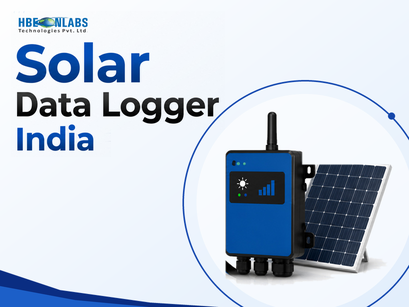
India’s solar industry is entering a new phase where compliance is no longer limited to electrical performance and safety standards. With the rapid expansion of grid-connected rooftop and commercial solar installations, regulatory authorities are placing greater emphasis on secure communication, real-time monitoring, and standardised data exchange between solar assets and central monitoring platforms. As demand for Solar Data Logger India solutions continues to grow, manufacturers are increasingly adopting advanced communication systems that enable secure data transmission, remote monitoring, and compliance with evolving regulatory requirements.
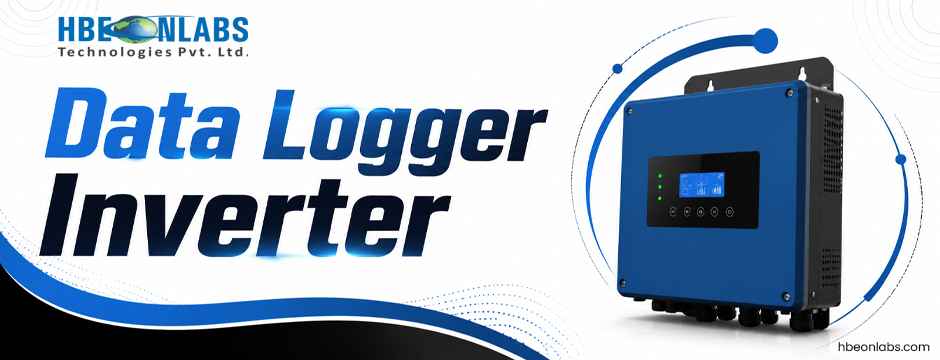
For inverter manufacturers, this means designing products that not only deliver efficient power conversion but also support reliable connectivity with government-approved monitoring infrastructure. A robust data logger inverter acts as the communication bridge between solar inverters and cloud or government servers, ensuring continuous transmission of operational data while supporting standardised monitoring frameworks.
Selecting the right inverter data logger has therefore become a strategic product development decision rather than simply adding another hardware component. Manufacturers that invest in reliable communication architecture can simplify deployment, improve interoperability across multiple projects, and strengthen their position in India’s rapidly expanding solar market.
National Server Connectivity refers to the capability of solar monitoring equipment to securely transmit operational data from field-installed solar inverters to centralised monitoring infrastructure specified by the relevant authorities.
The objective extends beyond data collection. It helps establish a standardised monitoring ecosystem that enables:
For inverter manufacturers, these requirements influence both hardware selection and firmware development. Communication devices must support reliable data acquisition while maintaining compatibility with specified network protocols and security requirements.
Tradarily, inverter development focused primarily on power electronics, conversion efficiency, thermal management, and protection mechanisms. However, today’s connected energy infrastructure demands equal attention to communication capabilities.
A modern solar inverter is expected to function as part of an intelligent monitoring ecosystem.
This requires the inverter to continuously exchange information such as:
Without a dedicated communication layer, meeting these requirements consistently across thousands of installations becomes increasingly difficult.
This is where an inverter data logger provides significant value by managing secure data acquisition, communication, storage, and transmission independently of the inverter’s core control functions.
A solar data logger collects operational information directly from the inverter using supported communication interfaces. It processes this information and securely transmits it to cloud infrastructure or designated monitoring servers.
Typical communication interfaces include:
Rather than modifying the inverter architecture for every deployment, manufacturers can integrate a dedicated communication module capable of supporting multiple deployment scenarios.
This modular approach simplifies product development while improving scalability.
Reliable connectivity is one of the most important aspects of compliance.
Solar installations are deployed across:
Each environment presents different communication challenges.
A properly designed data logger inverter solution supports these diverse operating conditions by providing:
Communication modules can utilise Wi-Fi, Ethernet, or 4G LTE depending on project requirements. Automatic reconnection capabilities help minimise communication interruptions.
Rather than sending information only during manual inspections, data loggers continuously transmit operational data at configurable intervals.
Temporary communication failures should not result in permanent data loss.
Many advanced data loggers store information locally before automatically synchronising once connectivity is restored.
Firmware updates, configuration changes, and diagnostics can be performed remotely, reducing maintenance costs while improving operational efficiency.
Modern regulatory frameworks increasingly encourage secure Machine-to-Machine (M2M) communication.
Unlike consumer-grade communication methods, M2M communication is designed specifically for industrial equipment operating continuously with minimal human intervention.
For inverter manufacturers, this provides several operational benefits:
An industrial-grade inverter data logger designed for M2M communication helps manufacturers align their products with enterprise-level deployment requirements.
Most inverter manufacturers offer multiple product variants with different capacities.
These may include:
Instead of developing separate communication systems for every product family, manufacturers can standardise around a common communication architecture.
Using the same data logger platform across multiple inverter models provides:
This approach also simplifies future product upgrades.
Solar projects rarely use identical hardware throughout every installation.
Large EPC companies often deploy different inverter models based on project specifications.
A flexible communication solution should therefore support:
This flexibility enables manufacturers to participate in diverse project environments without redesigning communication hardware for every deployment.
National connectivity requirements are closely linked with continuous system monitoring.
A solar data logger enables manufacturers and service providers to monitor:
This information allows service teams to identify operational issues quickly while reducing site visits.
For large-scale deployments, centralised monitoring significantly improves maintenance planning.
Data logging is not only useful for reporting.
Historical operational data helps identify gradual performance changes before they become major failures.
Examples include:
Analysing these trends enables maintenance teams to schedule servicing proactively rather than reacting after failures occur.
For inverter manufacturers, this improves long-term product reliability and customer satisfaction.
India’s solar market continues expanding across residential, commercial, industrial, and utility sectors.
As project sizes increase, communication infrastructure must scale accordingly.
An enterprise-grade data logger inverter solution supports:
This scalability allows manufacturers to support both small rooftop systems and large commercial portfolios using the same communication ecosystem.
Communication devices connected to national infrastructure must maintain strong security standards.
Modern solar data loggers typically include:
These capabilities help protect operational data while reducing cybersecurity risks associated with connected infrastructure.
Manual maintenance becomes increasingly expensive as installation numbers grow.
Remote diagnostics supported by a Solar Data Logger India solution enable service engineers to:
Many issues can be resolved without sending engineers to site, reducing operational expenditure for both manufacturers and EPC companies.
Communication compliance should not delay commercial launches.
Using proven communication hardware helps manufacturers reduce development effort by providing:
This enables engineering teams to focus on inverter innovation rather than developing communication infrastructure from scratch.
Choosing the right communication platform requires evaluating several technical considerations.
Key factors include:
Support for Wi-Fi, 4G LTE, RS485, RS232, USB, and other commonly used interfaces provides deployment flexibility.
Over-the-air firmware updates simplify long-term maintenance while reducing service costs.
Secure communication protocols help protect operational information throughout transmission.
Industrial deployments require hardware capable of operating under varying temperature and humidity conditions.
The communication platform should integrate smoothly with cloud dashboards and authorised monitoring systems.
Data buffering helps prevent information loss during temporary network interruptions.
The platform should support future expansion without requiring major architectural changes.
As compliance expectations continue evolving, communication infrastructure has become an essential part of inverter design.
Manufacturers that adopt scalable, standards-oriented communication solutions gain several long-term advantages:
Investing in a robust Solar Data Logger India solution enables manufacturers to build products that are not only technically capable but also prepared for the increasing demands of connected solar infrastructure.
At HBeonLabs Technologies Pvt. Ltd., we develop advanced data logger inverter solutions that help inverter manufacturers, OEMs, EPC companies, and renewable energy businesses build reliable, connected, and compliant solar monitoring systems. Our expertise in embedded systems, IoT, electronics design, and cloud connectivity enables us to deliver Wi-Fi and 4G-enabled inverter data logger solutions designed for secure communication, remote monitoring, firmware management, and scalable deployments. With a strong focus on quality engineering and long-term reliability, we work closely with our partners to simplify integration while supporting the communication requirements of India’s evolving solar ecosystem.
Reliable communication has become a fundamental requirement for modern solar infrastructure. As national monitoring frameworks continue to evolve, inverter manufacturers must ensure their products can securely exchange operational data while supporting standardised connectivity requirements. A robust inverter data logger provides the communication foundation needed to enable continuous monitoring, secure data transmission, remote diagnostics, and scalable deployment across residential, commercial, and utility-scale solar installations.
By integrating a dependable Solar Data Logger India solution into their product portfolio, manufacturers can strengthen compliance readiness, improve operational efficiency, simplify large-scale deployments, and deliver connected solar solutions that are prepared for the future of India’s renewable energy sector.
A solar data logger enables inverter manufacturers to collect, store, and transmit operational data from solar inverters to cloud platforms or designated monitoring systems. It supports real-time performance monitoring, remote diagnostics, and helps manufacturers build communication-ready solutions that align with evolving regulatory and industry requirements.
An inverter data logger should offer reliable communication interfaces such as RS485, RS232, USB, Wi-Fi, or 4G LTE, along with secure data transmission, remote firmware updates, local data storage, cloud integration, and compatibility with multiple inverter models. These features ensure scalability and long-term operational reliability.
A data logger inverter continuously captures operational data, including power generation, voltage, current, fault events, and system status. This information is transmitted to a central monitoring platform, allowing manufacturers and service teams to monitor system performance remotely, identify issues quickly, and reduce on-site maintenance visits.
Yes. Many modern solar data loggers are designed to support multiple communication protocols and interfaces, making them compatible with a wide range of inverter brands and models. This flexibility allows OEMs, EPC companies, and system integrators to deploy standardised monitoring solutions across diverse solar projects.
At HBeonLabs Technologies Pvt. Ltd., we design and develop advanced solar data logging solutions that support secure communication, remote monitoring, cloud connectivity, and scalable deployment. Our Wi-Fi and 4G-enabled data loggers are engineered to simplify integration with solar inverters while helping manufacturers build reliable and future-ready monitoring infrastructure.